
Know what your farmland should rent for.
A fair-rent report for your cropland and pasture, built from USDA soil maps, nine years of satellite images of your own fields, local cash rents, and what a tenant can afford at next year's prices. Plain English, one clear number, and the reasons behind it.
Most farmland is rented by people who don't farm it.
Many owners inherited the land, live far away, and set the rent on a handshake or a guess. Charge too little and you leave thousands on the table. Charge too much and you can lose a good tenant.
acres of U.S. farmland are rented out
USDA TOTAL survey, 2024of those rented acres are owned by people who don't farm
USDA TOTAL survey, 2024is the average age of those landlords; most got the land by inheritance
USDA TOTAL survey, 2024Three steps. You only do the first one.
Show us the farm
Find it on the map and outline the field. That's it: no rent figures, no paperwork, no calls.
We run the numbers
Soils acre by acre, nine years of satellite images of your crop, county and neighboring rents, flood risk, and what a tenant can afford at next year's prices and costs.
You get the report
A clear rent range, a target, the reasons behind it, and a ready-to-send letter to your tenant. Usually within the hour, always within three business days.
Everything a landowner needs to set a fair rent.
Not a county average with your name on it. Every report is built for your own fields.
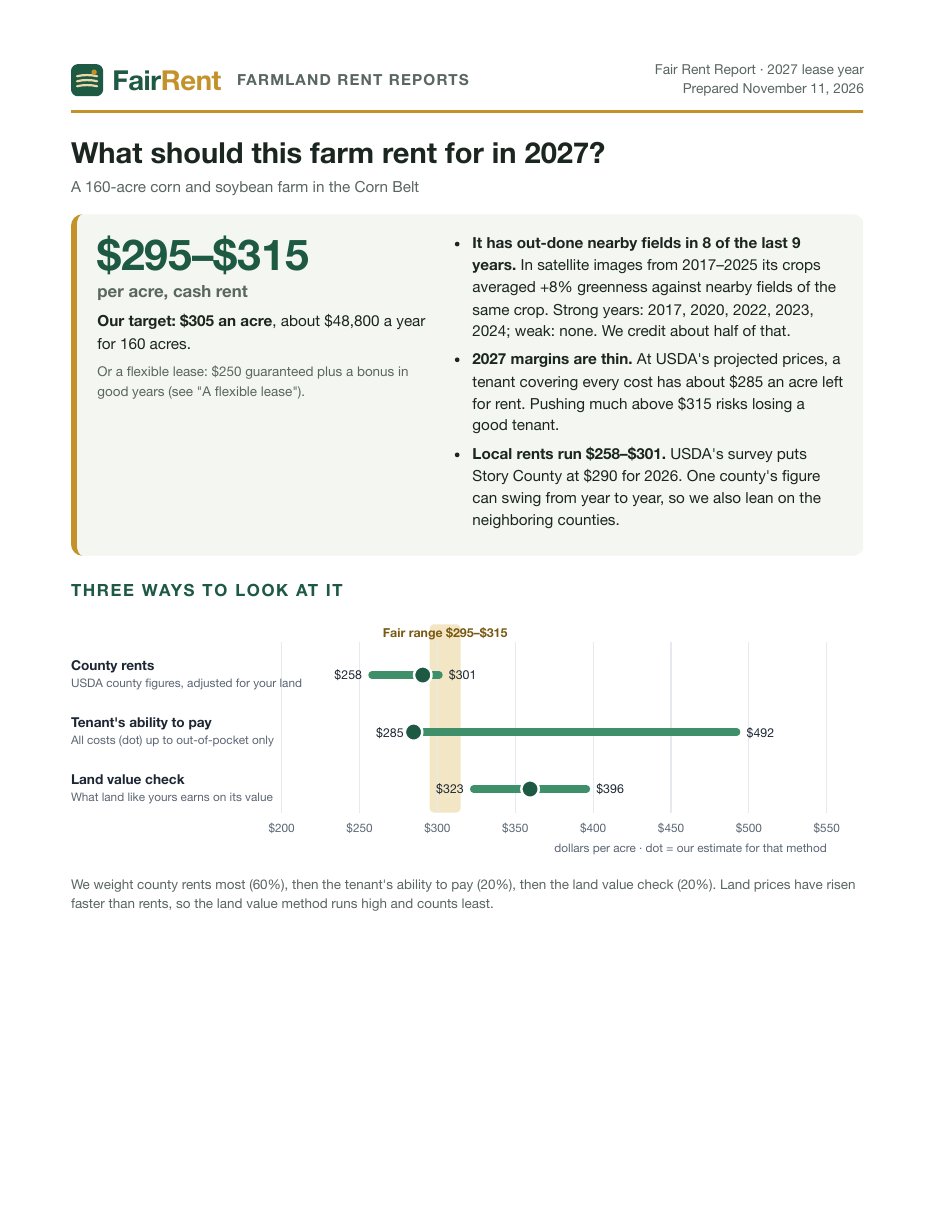
A fair rent range and a target
One number to propose and the range around it, with the latest year's rents counting most. Part crop, part pasture? You get a rent for each, by the acre, and the total.
Your fields' track record
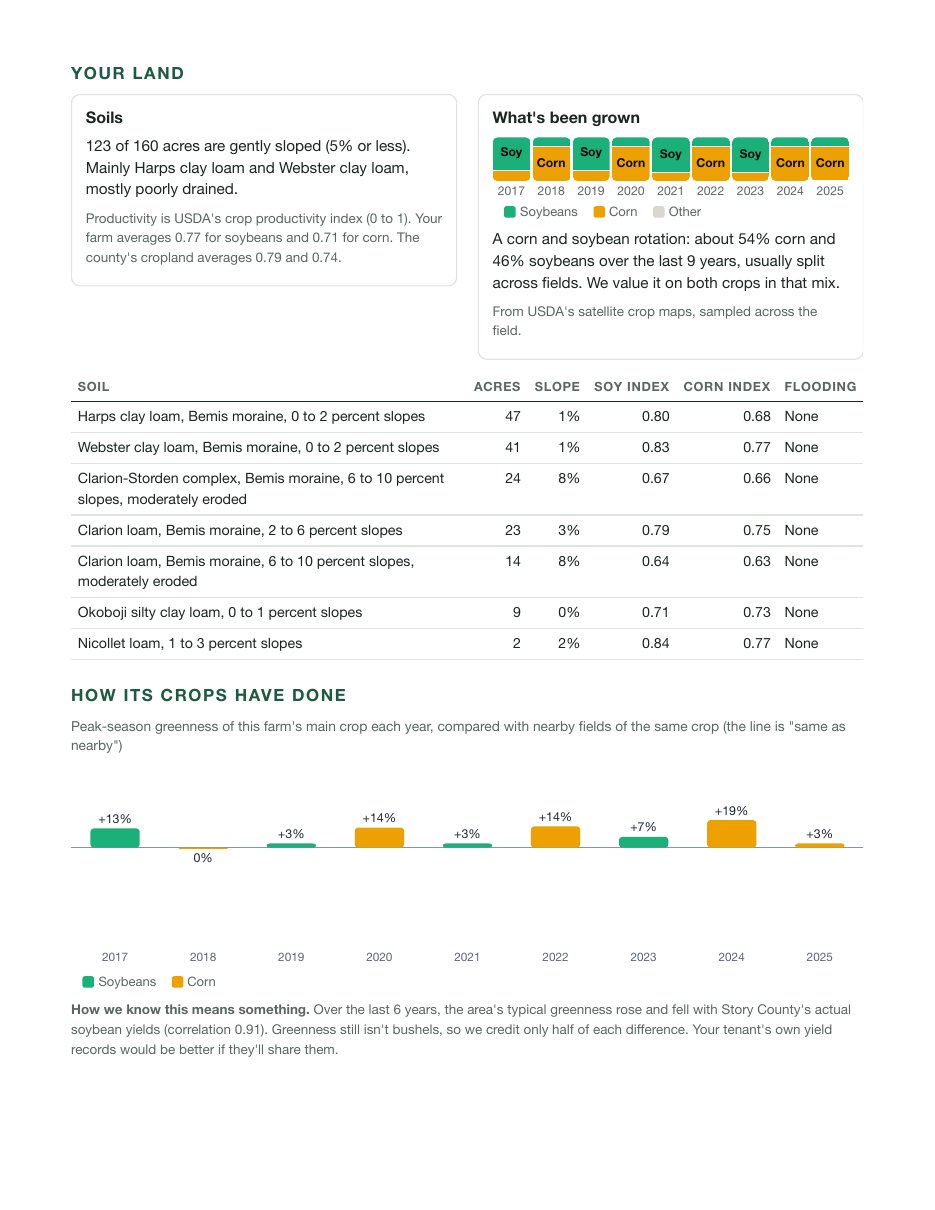
Nine years of satellite images show how your crops, or your pasture's grass, compared with nearby fields, year by year. Good years, bad years, and why.
Your farm from above
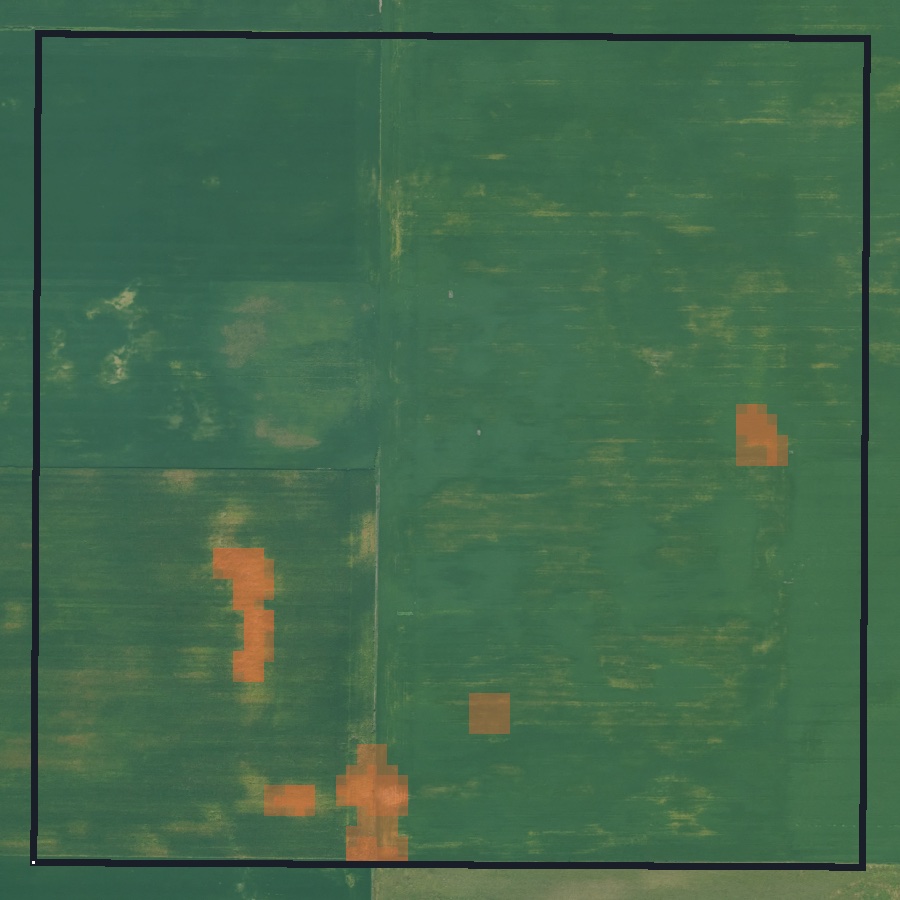
An aerial photo with the spots that lag year after year marked in orange: wet spots, eroded knobs, shaded edges. Worth a walk with your tenant.
Soils and flood risk
Every soil on the farm from the USDA soil survey, how productive it is against the county, and, for bottom ground, the months it tends to flood.
What a tenant can afford
Next year's yields, USDA's price outlook and current production costs, so you can see the rent from your tenant's side of the table too.
A flexible lease option
A guaranteed base plus a bonus in good years, with a table showing exactly what it pays at different yields and prices.
Your state's deadlines
When and how notice has to be given to change the rent or end a year-to-year lease where your farm is.
Other uses for weak acres
When the poorest ground might earn more in a conservation program, a wetland easement, a hunting lease or another use, and the catch with each.
A letter to your tenant
A friendly, plain letter proposing the new rent, ready to fill in and send. The hardest conversation, already started for you.
Which acres carry the farm, and which don't.
We compare every 30-foot square of your field with the rest of the field, every summer since 2017. Ground that lags year after year shows up in orange.
- Find the wet spots, washouts and shaded edges
- Know what to fix, and what might earn more another way
- Thin strips like field roads and waterways are filtered out
Your fields' own record, year by year.
How your crop's late-summer greenness compared with every nearby field of the same crop, from 2017 to now. In a river bottom, you'll see the wet springs and the dry summers it rode through.
- Checked against actual county yields, so you know it means something
- We give your farm credit for only half of each difference, to stay conservative
- Your own knowledge of the farm still counts for more
We don't manage farms or take a cut of your rent.
FairRent only sells reports. We never contact your tenant, never negotiate, and never earn more when your rent goes up or down.
| FairRent | Farm manager | Free county averages | |
|---|---|---|---|
| Cost | $79, then $49 a year if you want updates | Usually 6–10% of your rent, every year | Free |
| Built for your fields | Yes: your soils, your satellite record, your flood risk | Yes, from their judgment | No, one number for the whole county |
| Shows the reasons | Every number, with its source | Varies | No |
| Who they work for | Only you, for a flat fee | You, paid by a share of the rent | No one |
| Day-to-day lease management | No. A report, not a manager | Yes | No |
One flat price. No commission.
If we can't build a report for your farm, you get a full refund automatically. Change your mind? Ask within 30 days and you'll get your money back.
Fair Rent Report
For one farm (up to 640 acres).
- Fair rent range and target
- Nine-year satellite crop record
- Aerial weak-spot map
- Soils, flood risk and tenant budget
- Flexible lease option
- Your state's deadlines
- Letter to your tenant
Report + yearly update
Everything in the report, kept current. Cancel any time.
- Everything in the Fair Rent Report
- Each September: the newest full year of satellite results for your farm
- An updated rent number for the next lease year
- A reminder before your state's notice deadline
- A fresh letter to your tenant
Cropland and pasture across the Midwest, with more states coming.
Every state has its own lease rules, so we open a state only after its numbers and notice rules are checked. Corn, soybeans and wheat, irrigated or not, plus pasture.
Your state not ready yet? Join the waitlist and we'll tell you the day it opens. See cash rents for every state and county.
Good questions, plain answers.
Do I have to tell you what I charge now, or what neighbors pay?
No. Show us where the farm is and outline the field. Everything else comes from public data: USDA's cash rent surveys for your county and the counties around it, the soil survey, county yields, and satellite and aerial images.
Where do the numbers come from?
USDA's National Agricultural Statistics Service (cash rents, land values), the NRCS Soil Survey (soils, productivity, flooding), the Farm Service Agency (county yields), USDA's price outlook, university and USDA production cost budgets, USDA aerial photography, and the European Space Agency's Sentinel-2 satellites. Every report lists its sources.
How accurate is it?
It's a well-grounded starting point, not a guarantee. Public data lags the market, and satellite greenness isn't bushels, which is why we give your farm credit for only half of each difference we measure and say so. You know your farm and your tenant; the report gives you the numbers and reasons to go with that knowledge.
Is this an appraisal or legal advice?
No. It's information to help you set a fair rent. It isn't a property appraisal, and it isn't legal advice. Where lease law matters, the report tells you the rule we found and where it comes from, and suggests you confirm it before acting.
Will you contact my tenant?
Never. We don't manage farms, negotiate leases, or act for either side. What you do with the report is up to you. The report includes a letter you can send yourself if you want to.
What kinds of farmland do you cover?
Corn, soybean and wheat ground, including wheat and fallow and double-cropping, and non-irrigated pasture or hay ground, in the states marked ready above. A farm that's part crop, part pasture gets a rent for each, by the acre, plus the total. Woods are listed but not priced. If your state isn't open yet, join the waitlist and you won't be charged. If the ground turns out to be mostly other crops, you get a full refund automatically.
Do you price irrigated ground?
Yes, cropland. The order page asks whether the ground is irrigated, and your answer decides the numbers: USDA's irrigated rents and irrigated yields for your county, and the costs of running a center pivot. We check your answer against public irrigation maps; they stop at 2017, so if they disagree, the report says so and you can tell us. If only part is irrigated, outline that part and order the rest separately. Irrigated pasture isn't covered yet.
How do you handle wheat?
We read wheat in its own season, in spring rather than midsummer, and count the fallow year in the rotation. Full-cost budgets often run above what dryland wheat brings in at USDA's prices, so where that happens the report says so and leans on local rents. In that case, treat the target as the low side of fair.
How do you price pasture?
By the acre, the way most pasture is rented. We start from USDA's pasture rents for your county and the counties around it, adjust for how green your pasture has stayed through the grazing season compared with nearby pasture (from nine years of satellite images), and check it against what pasture like yours earns on its land value. The report also shows what that comes to per cow-calf pair per month, and the lease terms that matter most for pasture: stocking limits, fences, water, fertility and brush.
My farm isn't a neat quarter section. Is that a problem?
Not at all. Outline the fields on the map, as many pieces as you need, up to 640 acres per report.
What's the yearly update?
Each September you get a new report: the newest full year of satellite results for your farm, updated rents, prices and costs, a new rent number for the coming lease year, and a fresh letter. We email you in August, a month before the $49 renewal on September 1, with your state's notice date. Your first renewal is the first September at least six months after you order. Cancel any time by replying "cancel".
How fast will I get my report?
Usually within the hour, always within three business days. It comes by email from hello@fairrent.farm as a PDF, with the letter to your tenant.
What if I want my money back?
Reply to any of our emails within 30 days of a charge and ask; you'll get a full refund. If we can't build a report for the land you outlined, we refund you automatically and tell you why. If we can price less than half of what you outlined, you get the report for what we could price and a full refund.
Who answers my email?
Our automated assistant answers most questions, using this page and your own report. Reply "person" any time and a person will get back to you.
Who's behind FairRent?
An independent service. We don't manage farms, negotiate leases or take a cut of anyone's rent. Rather than ask you to take our word for it, we show the work: read a full sample report, check the public sources named in every report, and if it doesn't help you, ask for your money back within 30 days.
Is my information private?
Yes. We use your farm's location only to build your report. We don't sell your information, we share it only with the services that run FairRent (listed on our privacy page), and we never contact your tenant.
Set next year's rent with confidence.
Many leases need written notice by fall or early winter to change next year's rent. A fair number, with reasons you can show your tenant, starts here.
Get your report · $79